Manaslu Circuit Trek: A 13-Day Route on One of Nepal’s Least Crowded Treks
For years, I’d wanted to go trekking in the Himalayas, but I didn’t like the idea of sharing the trail with big crowds. Instead, I chose the Manaslu Circuit Trek, one of the best less crowded treks in Nepal.
Known for its remote Tibetan villages largely untouched by mass tourism, the 13-day circuit begins in lush green foothills before climbing steadily towards some Himalayan giants, eventually crossing the Larkya La Pass at 5,106 metres.
I completed the Manaslu Circuit in October, with toes full of blisters and a very full heart. It was easily one of the most rewarding experiences I’ve had, and that’s saying something after three years of full-time travel.

In this post, I’ll share what the Manaslu Circuit Trek is really like, who I think it’s best suited to, and what to expect along the route, along with a few honest tips to help you prepare.
I’ll also touch on my experience trekking with Himalayan Masters, the company I travelled with.
Disclosure: This post includes affiliate links. If you decide to click through and make a qualifying purchase, I will receive a small commission at no extra cost to you – thanks for your support.
Highlights
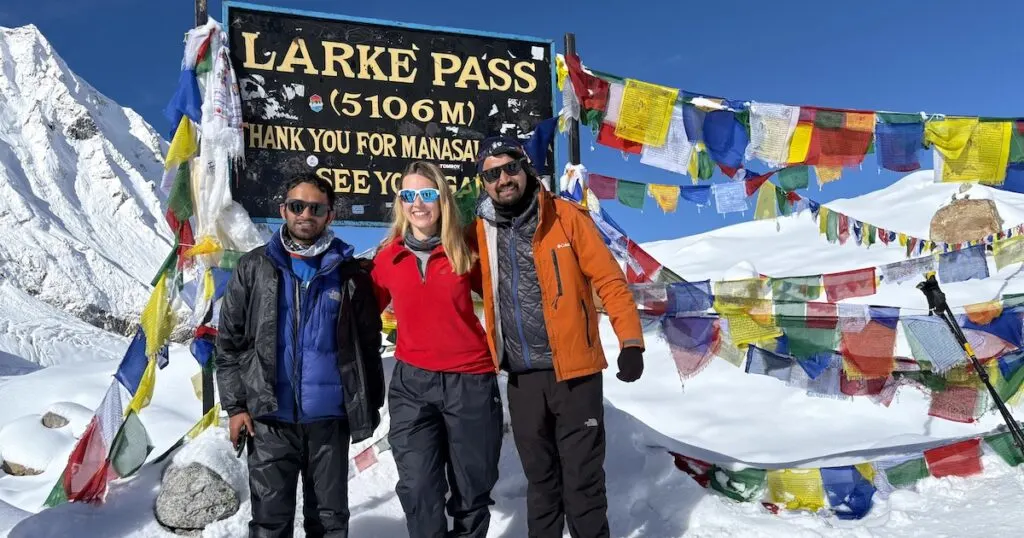
- The Larkya La Pass, at 5,106 metres, is by far the highlight – and most challenging part – of the circuit. Surrounded by huge snow-capped mountains, it’s an incredible place to stand after days of gradual ascent. If you’re lucky, like I was, the pass can be covered in fresh snow.
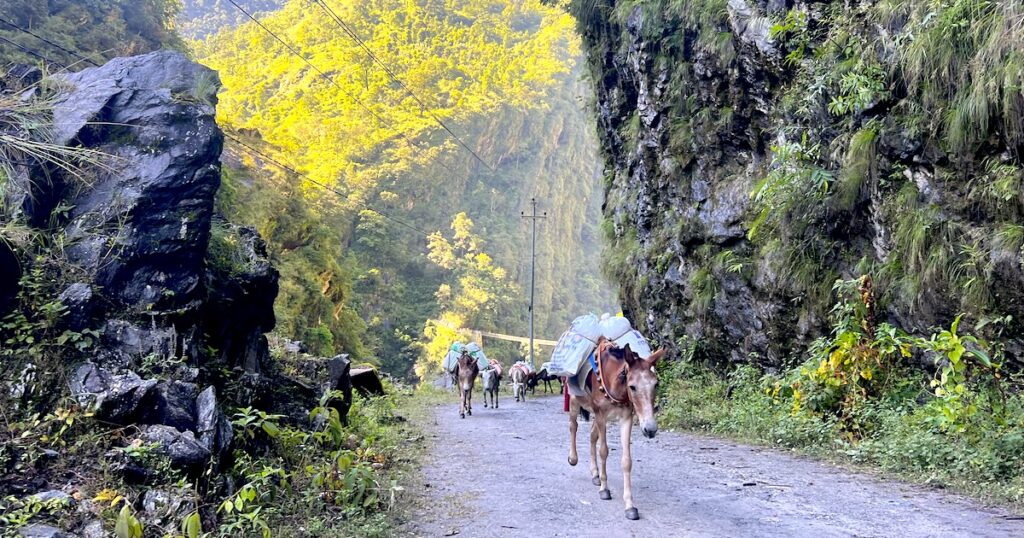
- Tibetan mountain villages like Samdo and Samagoan are fascinating, with monasteries, mani stones and stupas. All supplies are carried in by donkeys, so the remoteness really hits you.
- The lower valleys were the biggest surprise for me. They’re unbelievably green, with huge waterfalls and long suspension bridges. If the weather’s on your side, these early days are warm, bright and very scenic.
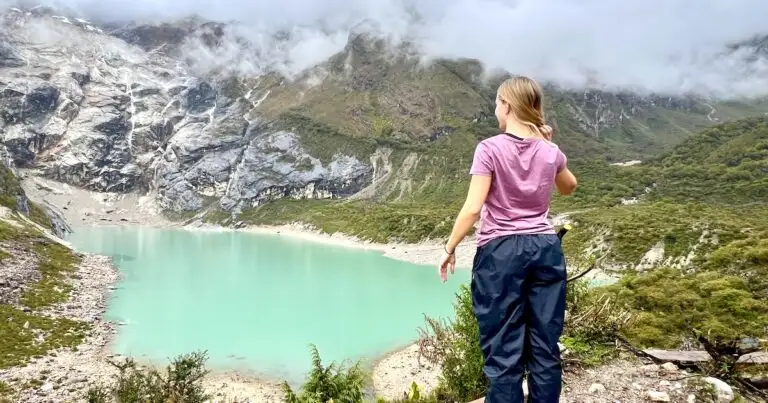
- Birendra Lake, near Samagaon, is an easy side trip to an ice-blue alpine lake. There are also options to hike to Manaslu Base Camp or the Tibetan border, but these are more challenging and weather-dependent.
Can You Do The Manaslu Circuit Without A Guide?

It’s not possible to trek the Manaslu Circuit independently. All hikers must be accompanied by a certified guide and obtain the required permits, as the route is through a restricted area.
I chose to trek with Himalayan Masters, a company that works with local guides from the region. Having a guide made the experience much smoother, especially when it came to permits, navigation, and understanding more about the villages along the way.
If you’re currently looking at trekking companies, I had a really positive experience with them. They also offered me a small discount code (KATIE5) for readers, which gives 5% off the cost of the trek.
Disclosure: I received a discounted rate on this trek in exchange for sharing my experience. As always, all opinions are my own, and I only recommend experiences I genuinely enjoyed.
Manaslu Circuit Trek Route
Days 1–4: Lower villages
The first day of the Manaslu Circuit is dedicated to travelling from Kathmandu to the starting point – usually an 8-hour journey by bus and four-wheel drive.
For me, that was Macchu Khola, although some itineraries begin earlier in Soti Khola to avoid the challenging road by car.

On day two, you follow that same road on foot, passing waterfalls and occasional landslide areas – more common after the monsoon season. From day three onwards, the trail properly begins, leaving the road behind.
These early days are hot and humid, often reaching around 28°C if the sun’s out. The foothills were the biggest surprise for me: lush green valleys, huge waterfalls and long suspension bridges.
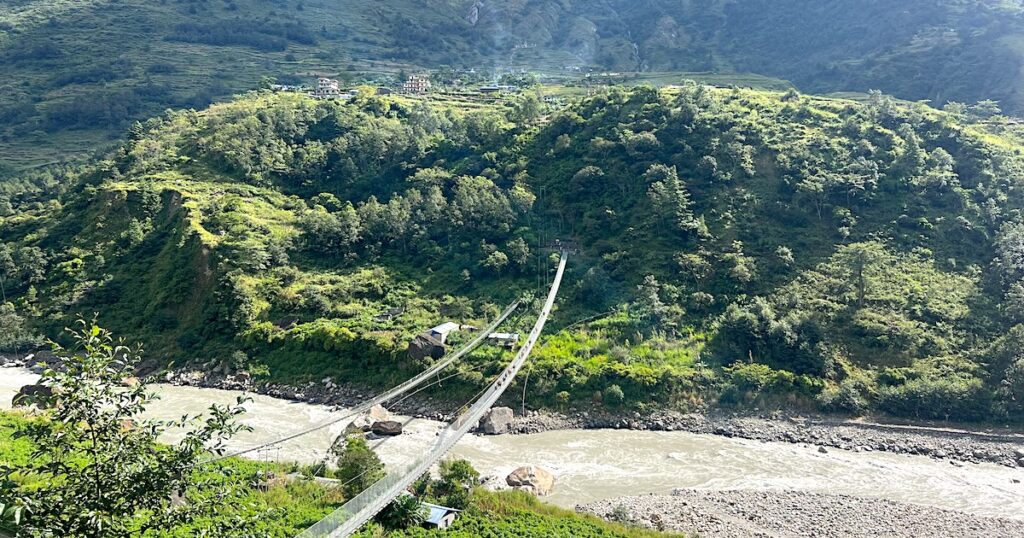
The distances are long (around 20 – 22 kilometres), with plenty of ‘Nepali flat’: no steep mountain climbs but gradual ups and downs which can feel tiring in the heat.

Days 5–9: Into the mountains
This is where the landscape begins to change, as you gain elevation from Namrung (2,630 metres) to Samdo (3,875 metres).
The daily distances shorten, sometimes to as little as five kilometres, but the climbs become steeper and more demanding, especially with the thinner air.

This part of the trek is where you’ll begin to get glimpses of snow-capped mountains, including Mount Manaslu on clear days. It also gets noticeably colder, and layering becomes essential.
The villages also begin to shift in character, with the Tibetan influences becoming more prominent. Monasteries, mani stones, and prayer flags are scattered throughout, and everything feels much more remote with food carried in by donkeys for several days.
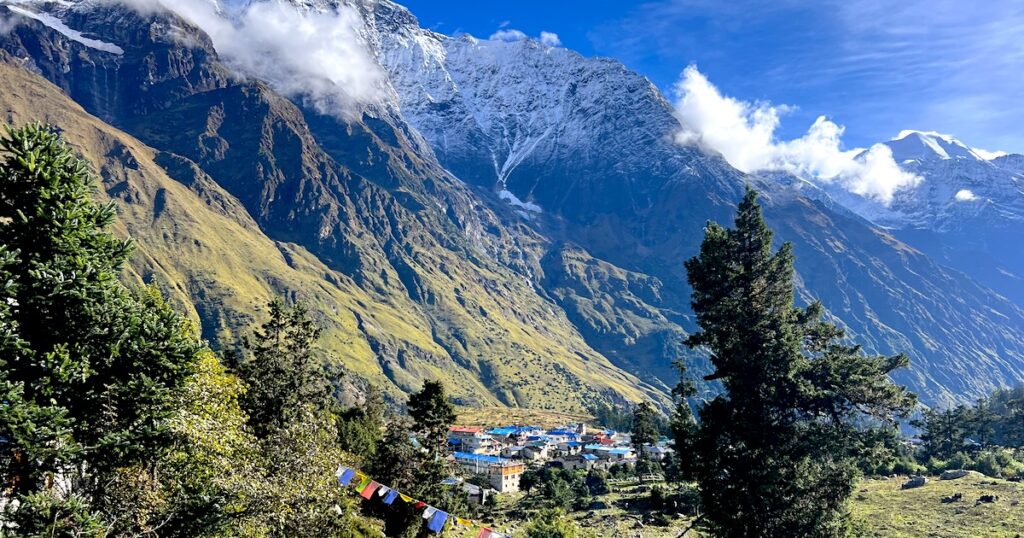
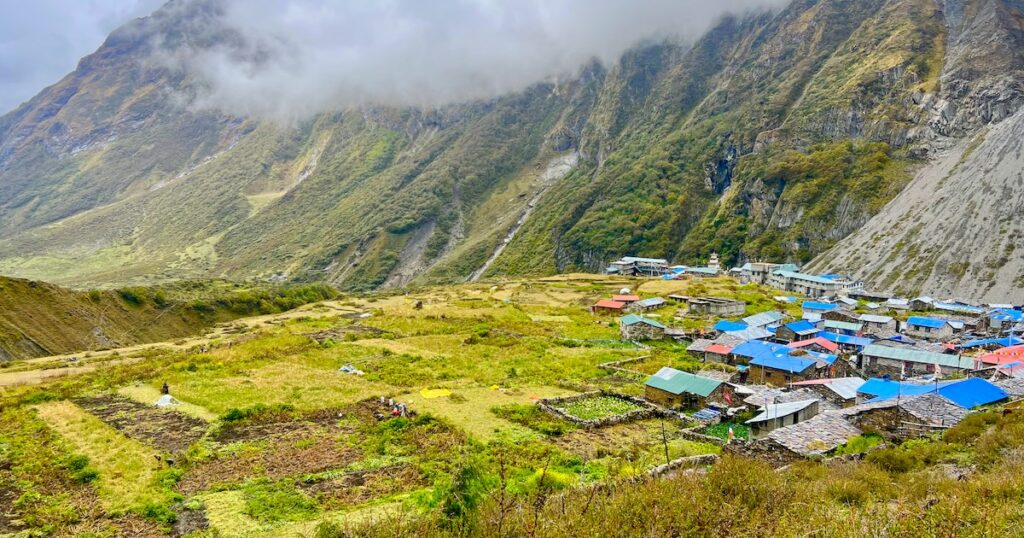
During these days, there’s also the chance to go on several optional acclimatisation hikes, including Birendra Lake, Manaslu Base Camp, and viewpoints towards the Tibetan border.
These side trips are well worth considering if you have the energy, as they help with acclimatisation and add variety to the route, but not always possible depending on the weather.

Days 10–11: High altitude and The Larkya La Pass pass
By day ten, you’ll reach Dharmasala (4,460 metres), the highest sleeping elevation, to prepare for your early-morning hike to the Larkya La Pass. It’s a cold night, often around -5°C, and then a long, challenging but rewarding next day.
Summit day begins around 4am, hiking uphill in the darkness until you reach the Larkya La Pass, the highest point of the trek at 5,106 metres.


Crossing the pass, surrounded by snow-covered peaks, is easily the most memorable moment from the Manaslu Circuit Trek. For my team, it snowed heavily throughout the night and we woke to inches of fresh snow – a surreal experience.
I was on my feet for 8 – 9 hours in total, minus the lunch break. The descent brings you to Bhimtang (3,590 metres), where yaks graze beside the river and the Annapurna range hovers on the horizon.

Days 12–13: Descent
Most of the descent happens in one long day from Bhimtang to Tilje (around 20 kilometres). The trail drops quickly, and while it’s tough on the knees, the scenery is spectacular if the skies are clear.
Snow-capped peaks are visible pretty much all the way down, except for when you’re in the forest. Speaking of which, as you lose altitude, the landscape transforms rapidly from alpine terrain to dense forest, rivers and rockier valleys.

I’d been feeling slightly affected by the altitude higher up, but noticed my energy returning almost immediately as we descended.
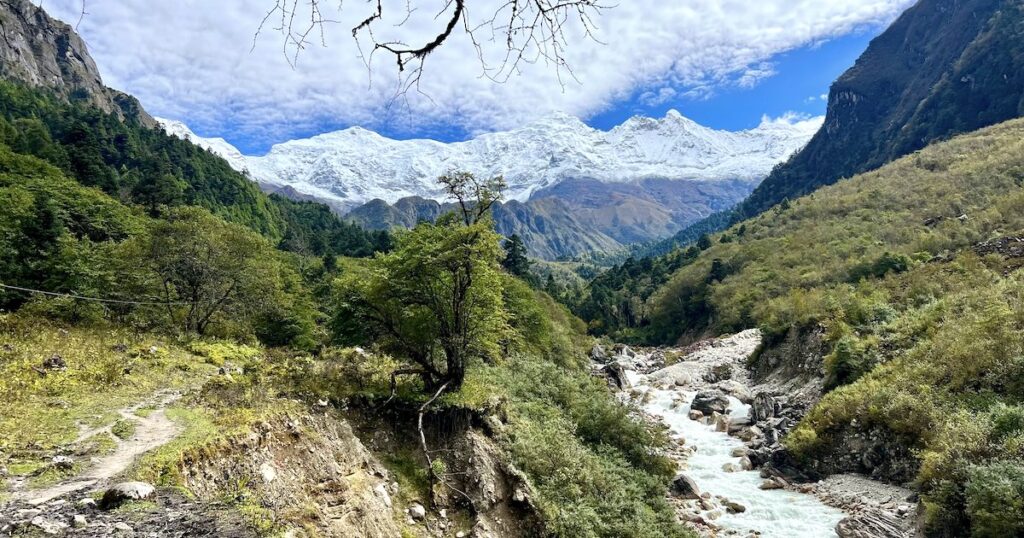
On the final day, you travel by jeep through a valley – the same used by people starting the Annapurna trek – and then continue the drive back to Kathmandu by bus or van. It’s quite a fun day, watching eager-eyed trekkers heading towards the Annapurna range.
What The Manaslu Circuit Trek Is Actually Like
- The terrain is incredibly varied. It starts out on a road where landslides can be a risk, before transitioning to trails of dirt and stones. Near the Larkya La Pass, you may hike on snow or ice (microspikes are essential).
- The tea houses get more basic the further you trek. Most accommodation is in simple rooms with shared bathrooms. Hot showers are usually available for an extra fee. In Dharmasala, facilities are very limited, and you sleep in temporary buildings (or tents during busy periods).
- The food was surprisingly varied. With dal bhat, the local staple, you get unlimited refills, but menus always include potato, rice or noodles with vegetables, egg and/or tuna. Breakfast options include porridge (oat or local), cereals and bread variations. Portion sizes are huge.
- Altitude is something everyone experiences differently. I started to notice the thinner air above 3,200 metres, feeling more out of breath than usual. Aside from a small headache at the highest sleeping elevation and some nausea towards the top of the pass, I didn’t feel the altitude much. Others weren’t so lucky, and one trekker from another group had to descend by helicopter.
Is the Manaslu Circuit Trek Worth It?
For me, the Manaslu Circuit was absolutely worth it but I wouldn’t recommend it for everyone. What makes it so special is how remote it feels – every day, watching the donkeys loaded with supplies, I was astounded by how remote the villages were, and how families survived out there.
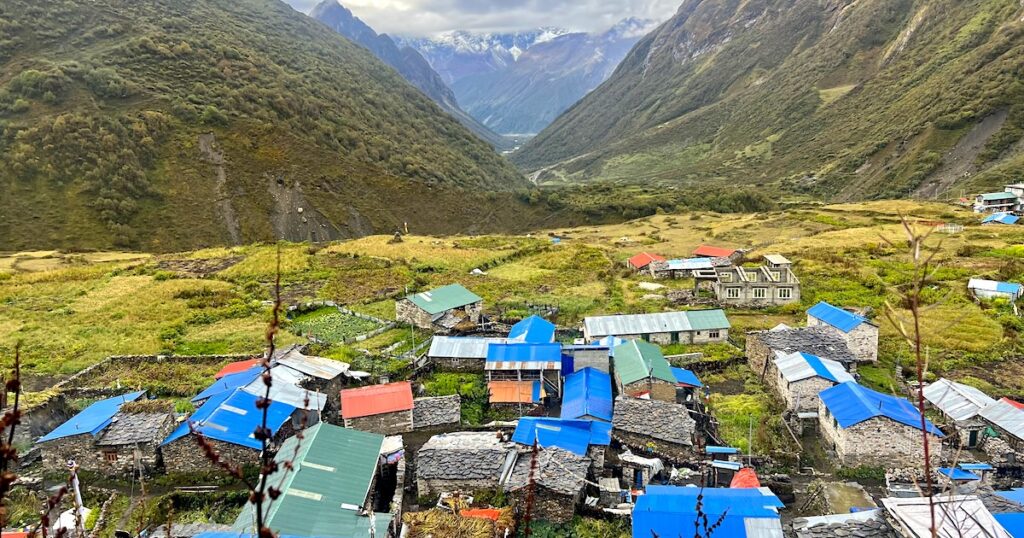
Compared to more popular routes like Everest Base Camp or the Annapurna Circuit, there are far fewer trekkers. The villages are also smaller, with fewer tea houses and luxuries designed for tourists. You feel genuinely off the beaten track, which is the feeling I really wanted.
The variety of landscapes is another big reason to choose this trek. Everest Base Camp starts out at high altitude, but on the Manaslu Circuit, you move from hot, green valleys to high alpine terrain.


This area is near the Tibetan border, so the villages are deeply connected to Tibetan culture, and you can see that reflected in the monasteries.
It’s a trek that constantly changes, which keeps it interesting from start to finish. All that being said, it’s physically demanding. You don’t need to be an expert hiker by any means, but it’ll help to have completed some two- or three-day treks near home in training.
One thing I do want to point out is the risks – landslides and altitude in particular. The Himalayas aren’t supposed to be a walk in the park; I had to cross landslide areas in the first couple of days, which was quite nerve-wracking, and made me happy to have a capable and confident porter and guide.
If you’re looking for a quieter alternative to Nepal’s most famous treks and don’t mind a bit of discomfort along the way, the Manaslu Circuit is an incredible choice. But if you’re new to trekking or prefer more developed routes, you might find it tougher than expected.
Choosing Your Trekking Company For The Manaslu Circuit
Because the Manaslu Circuit is a restricted area, you’ll need to trek with a licensed guide and organise permits through a registered company.
There are plenty of trekking companies in Nepal that cover the Manaslu Circuit, but the experience can vary quite a lot depending on who you go with. Some focus on lower-cost group treks, while others offer more personalised trips with smaller groups and experienced local guides.
I chose Himalayan Masters, a company that works with guides from the region. They handled all the logistics, from transport to accommodation.
Himalayan Masters helped to popularise and make this route possible, so they have really good connections with teahouses and locals – we often heard other trekkers complaining they wanted to stay in the teahouses we stayed at, but they were already full.
If you do end up looking at Himalayan Masters, they offered me a small discount code (KATIE5) for my readers, which gives you 5% off the trek.
Practical Tips
- Get an NTC local SIM card. WiFi is available in some locations, but costs money and is notoriously unreliable. NTC has the best signal in this area for data; I had internet for pretty much every day, up until the very high elevations. I picked mine up at this NTC shop in Thamel, Kathmandu.
- Pack light. You need to carry everything with you on the trek, so you don’t want unnecessary weight. I decided to pay for a porter, which made my experience so much more enjoyable. Someone on my team overpacked and had to ask my porter to carry some of their belongings partway through the trip, which isn’t always possible. A porter’s worth it, in my opinion.
- Listen to your guide. If they tell you to pack something, pack it. If they tell you to avoid an area on the trail, do it. If they tell you to hydrate, hydrate! There’s always a reason why. From the outset, Himalayan Masters gave me very clear instructions on what to pack and what to expect, and it made my life much easier.
Packing
What you pack for the Manaslu Circuit is very important, the region is far less developed than places like Everest region. I’ve put together a full Manaslu Trek packing list to help you prepare.
You can pretty much always buy essentials like toilet roll, crisps and water purification tablets, but you cannot get more specialist items like blister plasters, medication, clothes and hiking gear – so you need to bring everything with you to last the 13 days.
FAQs
The Manaslu Circuit is a challenging trek. While you don’t need technical climbing skills, the long distances, steep sections, and high altitude make it physically demanding, especially as you’re hiking for 13 consecutive days.
The Manaslu Circuit takes between 12 and 16 days, depending on your pace and acclimatisation days. I completed the trek in 13 days.
Yes, you must trek with a licensed guide, as the route passes through a restricted area. You’ll also need to organise permits through a registered trekking company.
The best times to trek the Manaslu Circuit are spring (March to May) and autumn (September to November), when the weather is more stable and views are clearer. I trekked in late September to early October, just after the monsoon season, and there were a few landslides early on.
Yes, the Manaslu Circuit trek is significantly less crowded than Everest Base Camp and the Annapurna Circuit. It’s a great option if you’re looking for a less crowded trek in Nepal.
Thanks for reading my guide to the Manaslu Circuit. If you have any additional questions, please leave a comment and I’ll get back to you. And happy trekking!
P.s., if you’re looking to relax after your trek, you may want to read my review of Mandala Yoga Retreat, widely argued to be the best yoga retreat in Kathmandu.