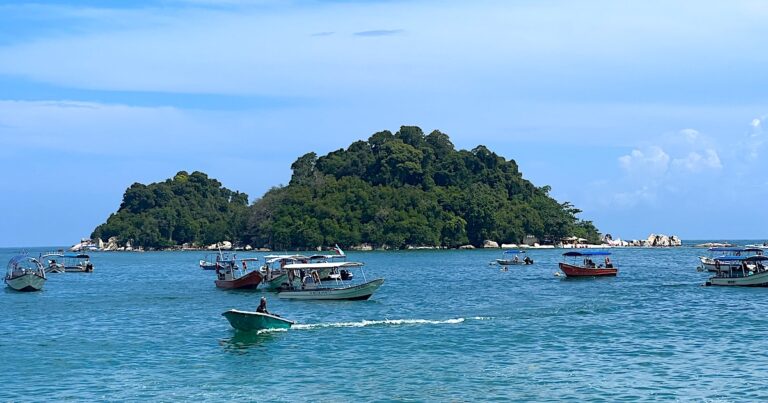
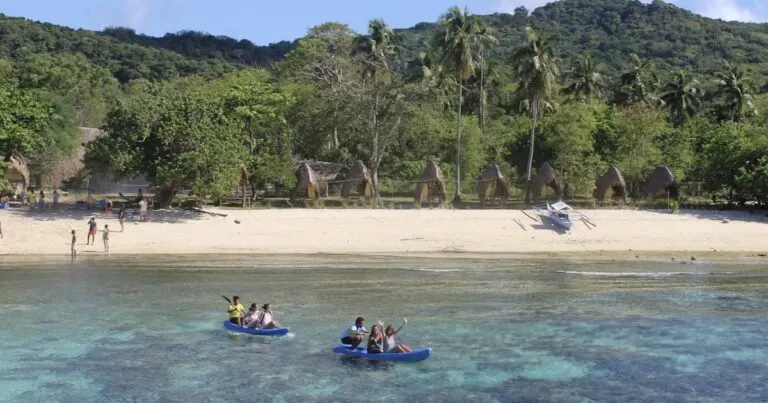
Malaysia Itinerary (1–2 Weeks): A Less-Crowded Route on The Peninsula
Malaysia is one of those places where there’s so much to do that it can feel quickly overwhelming. But planning your Malaysia itinerary shouldn’t feel stressful – it should feel exciting!
I’ve spent a total of 6 months in Malaysia, split between five visits (four to the Peninsula and one to Malaysian Borneo).

As well as spending a good chunk of time living in Kuala Lumpur and exploring with local friends, I focused on taking a Malaysia route that was a little different from the usual Penang-and-Langkawi itinerary
In this post, I’ll focus just on my recommended Peninsular Malaysia itinerary (mainland) which features a mix of jungle, towns and quieter islands.
If you’re planning to visit Borneo too, I recommend reading my one-week Sabah itinerary. You can easily add it onto this itinerary or mix and match depending on how much time you have.

1–2 Week Malaysia Itinerary Options
Malaysia 1-week itinerary: Fast-Paced
- Kuala Lumpur (city): 2 days
- Taman Negara (rainforest): 2 days
- Perhentian or Pangkor (islands): 3 days
Malaysia 10-Day Itinerary: More Balanced
- KL: 2 days
- Malacca (UNESCO foodie town): 1 day
- Cameron Highlands (tea and hiking): 2 days
- Perhentian Island (snorkelling and relaxation): 3 days
2 Weeks: The Full Peninsular malaysia Route
- KL: 2 days
- Malacca: 1 day
- Taman Negara: 2 days
- Cameron Highlands: 2 days
- Ipoh (temples and white coffee): 1–2 days
- Pangkor (island with temples): 2 days
- Perhentian: 3–4 days
Where to Go in Peninsular Malaysia (My Route)
1. Kuala Lumpur
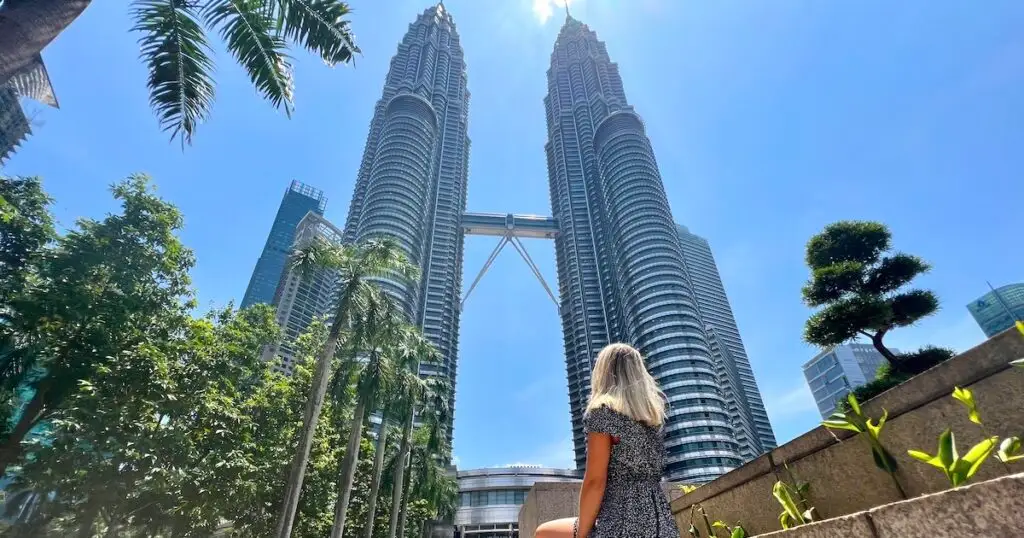
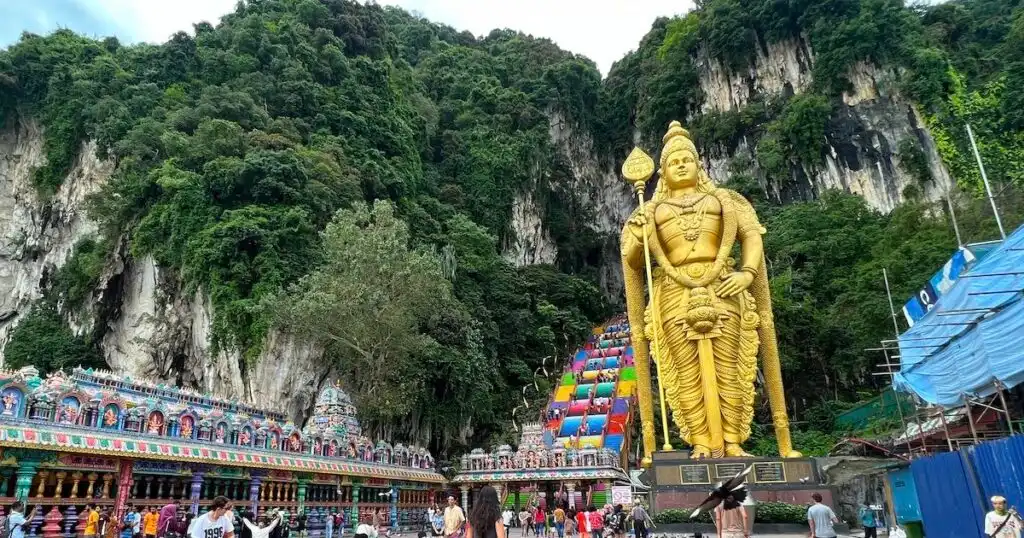
You can’t miss Kuala Lumpur on your Malaysia travel itinerary. With Chinese, Malay and Indian influences, it has incredible food and temples of all shapes and sizes – including the spectacular Batu Caves with its iconic 272 rainbow-coloured steps and 140-foot-tall Lord Murugan statue.
To get off the beaten track, you can visit Kanching Falls or Chin Swee Caves Temple near Genting. Well-known staples include the twin Petronas Towers and the markets of Jalan Alor and Petaling Street.
Check out my Kuala Lumpur itinerary for a complete list of things to do, where to stay and lesser-known spots.
2. Malacca
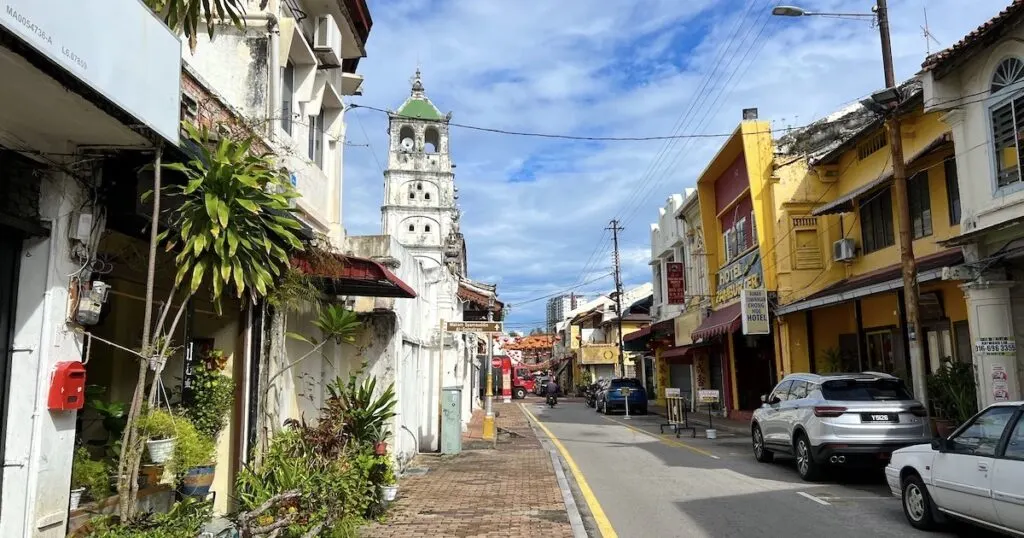

Malacca (or Melaka) is an easy add-on to Kuala Lumpur. You only need one night to see the UNESCO-listed town with a 500-year-old history and Asian and European influences. I’ve been there twice, and it’s a really nice spot where you can take rides on the river.
As my friend Gary, from nearby Johor, told me, Malacca’s known best as a foodie town with really good Peranakan (Nyonya) cuisine.
3. Taman Negara


Taman Negara is one of the most underrated places to visit in Malaysia. The country’s oldest rainforest isn’t as good as Sabah for wildlife watching, but it’s such a beautiful, authentic experience. You can go hiking in the rainforest, visit wildlife hides and take multiple different boat tours along the river (even go swimming if you wish).
At Taman Negara, you also have the chance to walk in the tree canopy and visit the Orang Asli tribe, an indigenous group in Malaysia.
Head over to my Taman Negara guide for a complete list of things to do, where to stay and how to get there.
4. Perhentian Islands
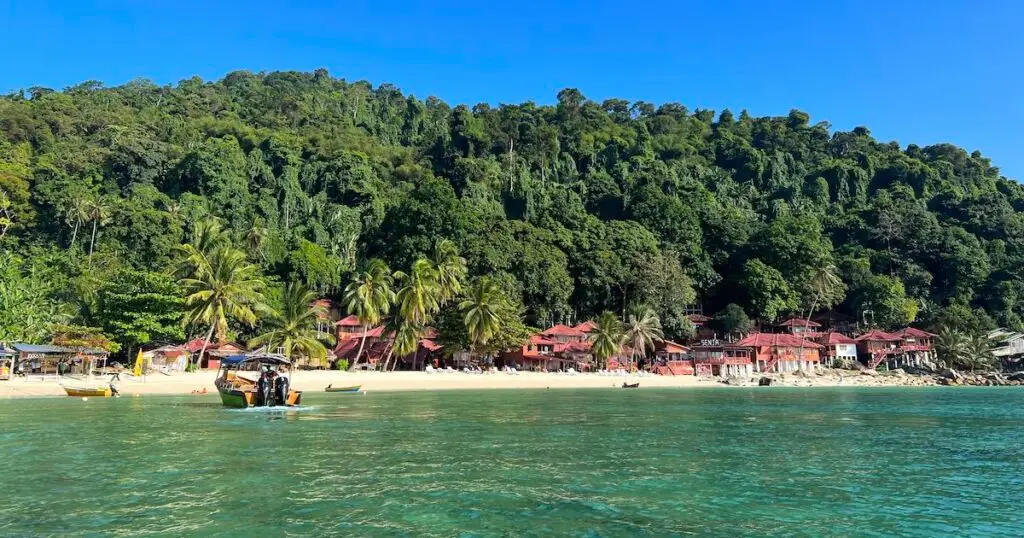

The Perhentian Islands is my favourite place on this mainland Malaysia itinerary. These islands, at the northeast of Peninsular Malaysia, have powdery beaches, insane diving and snorkelling (I saw so many reef sharks and colourful fish) and good hikes to boot.
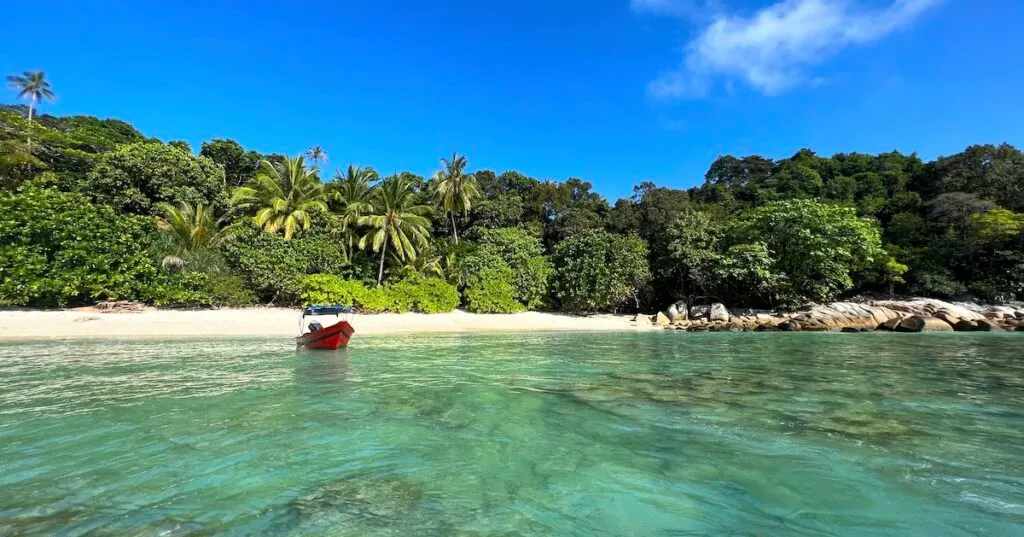
Some of the beaches I visited here were completely empty, which made it feel so idyllic. I also stayed right on the beach; waking up to the sand was a dream.
Read my Perhentian Islands guide for information on which islands to stay on, what to expect, and how to go snorkelling and diving.
5. Cameron Highlands


The Cameron Highlands are a welcome reprieve from the hot weather, set at a higher altitude. They’re best known for their tea plantations, where you can go to taste it yourself, and the Mossy Forest near the BOH Tea Plantation.
This place feels totally different to the other destinations on my itinerary, with small mountain towns and lots of seasonal hikes through the forested hills and farmland. My day hiking near Tanah Rata was a real highlight.
6. Ipoh


Ipoh is another of those best destinations in Malaysia that people too often skip. It has spectacular cave temples and an interesting Old Town full of street art, but many people come here purely to try the white coffee and food specialities.
Ipoh’s known for bean sprout chicken, Ipoh hor fun (flat rice noodles in a broth) and snacks like kacang putih (a roasted/fried nut and chickpea mix).
7. Pangkor

Pangkor is a quiet island between Ipoh and Kuala Lumpur that’s often overlooked. It’s very different to the other islands on my Malaysia travel itinerary (Perhentian), in the sense that has temples and is best for foodies, temple hopping and laidback beach time.
I went there with my friend, Klara, who is from Sarawak and really wanted to try some of the food. It turned out to be an unexpectedly beautiful, and so fascinating, with very few tourists.
I’ll soon be publishing a Pangkor Island guide for all the things to do.
Other Popular Places to Visit in Peninsular Malaysia (The Classic Route)
The classic tourist route through Peninsular (mainland) Malaysia is:
- Kuala Lumpur
- Cameron Highlands
- Penang
- Langkawi
I haven’t visited Penang or Langkawi yet, so I haven’t included them in my own route — but they’re easy additions if you want a more classic Malaysia itinerary.
Travel blogger Dan Round The World, who I know well from my time in Chiang Mai, has a really good guide comparing Penang vs Langkawi that you may find helpful to decide which one to visit.
1. Penang
Penang is another huge foodie destination, known for nasi kandar, char kway teow and asam laksa. George Town, UNESCO-listed, has colonial architecture and Chinese clan houses, plus vibrant street art.
Here, you can also get out into nature in the Penang National Park; it has beaches and hikes. It’s high on my list of places I want to visit.
2. Langkawi
Langkawi’s admittedly known as a bit of a party destination due to its duty-free status, but it’s also so beautiful with beaches and big viewpoints like the Skybridge (complete with a cable car) and its iconic Eagle Square.
It’s quite far north, so you may need to take a flight there. By bus, you need to get off in Kuala Kedah or Kuala Perlis and take a ferry.
Getting Around Peninsular Malaysia
There are really comfortable and efficient buses around Peninsular Malaysia. I’ve used them extensively; they’re easy to book on 12Go. Then, you just turn up at the bus station and print your physical ticket.
For less-usual routes (e.g. Taman Negara to Perhentian), there are smaller companies that operate air-conditioned shared vans. These can be booked at the bus offices in person. I had good experiences on these ‘buses’ too.
The Peninsula is large, so if you’re travelling far (e.g. Kuala Lumpur to Langkawi), it’s more efficient to take a flight. Note that many of the islands (including Pangkor and Perhentian) require a ferry crossing.

When to Visit Mainland Malaysia (The Peninsula)
On Peninsular Malaysia, each coast has a different monsoon pattern:
- The west coast (Malacca, Pangkor, Penang, Ipoh, etc) are best to visit from December to February.
- The east coast (Perhentian Islands, Tioman, etc) are best from May to September.
- Kuala Lumpur’s a bit of an exemption and best from January to February or May to July.
Therefore, the best time to visit Peninsula Malaysia is typically December to February (the dry season).
My first visit was in February, and it was spectacular weather pretty much the whole time; and Perhentian in February was unexpectedly dry and sunny with no crowds (completely off-season), so I was happy.
Tips for Planning Your Route
- Don’t rush it. Malaysia looks compact on a map, but travel days can take longer than expected especially by bus.
- Check the season before choosing your islands. The Perhentians and Pangkor have different best seasons.
- Stay flexible. Some smaller transfers, especially to Taman Negara or the islands, may need to be booked locally.