The 6 Best Things to Do in Sandakan and Sepilok: Orangutans and Other Adventures
Orangutans may steal the spotlight, but the best things to do in Sandakan and Sepilok go well beyond spotting just the one animal species.
This quiet corner of East Sabah is the gateway to the famous Kinabatangan River cruise, where you have the chance to glimpse wild orangutans, proboscis monkeys, saltwater crocodiles and pygmy elephants.
The Sandakan Peninsula is also home to Sepilok, a rainforest-covered area with two wildlife rehabilitation centres (one for orangutans and another for sun bears) and the Rainforest Discovery Centre.
Don’t fret if you’re unsure about how to plan your Sandakan itinerary. I took my Sandakan and Sepilok trip late last year, and I’m here to share my first-hand tips, a full list of the best things to do in Sandakan and Sepilok, plus a full itinerary.
Planning a bigger route around Malaysian Borneo? I’ve mapped out my full Sabah itinerary, including Sepilok, the Kinabatangan River, climbing Mount Kinabalu and island-hopping from Kota Kinabalu.
Disclosure: This post includes affiliate links. If you decide to click through and make a qualifying purchase, I will receive a small commission at no extra cost to you – thanks for your support.
Where are Sandakan and Sepilok?
After Kota Kinabalu, Sandakan is the second-largest city in Sabah, Malaysian Borneo.
Set on the northeast coast, it has a small domestic airport (SDK) with a handful of daily direct flights to Kota Kinabalu or Kuala Lumpur.
It’s also important to know that Sandakan often refers to the wider Sandakan Peninsula, which covers the small tourist town of Sepilok.
Is Sandakan Worth Visiting?
While Sandakan city itself is relatively quiet, it serves as the main gateway to one of Borneo’s most popular destinations, the Kinabatangan River.

The 350-mile-long river is a biodiverse area populated by wild orangutans, proboscis monkeys, macaques and other animals. It’s by far the best place in Borneo to spot truly wild animals.
Tip: The longer your river cruise, the greater your chances of spotting orangutans. A 3-Day 2-Night river cruise is best, as it includes 4-5 river cruises.
Sepilok is also particularly famous for its Sepilok Orangutan Rehabilitation Centre, the Bornean Sun Bear Conservation Centre and the Sandakan Rainforest Discovery Centre (RDC).
In the former two, you can see semi-wild, rehabilitated orangutans or sunbears up close.

Meanwhile, the RDC offers nature trails, guided night walks and a canopy Skywalk within the Kabili-Sepilok Forest Reserve.
So, yes, the Sandakan Peninsula is absolutely worth visiting if you’re visiting Malaysian Borneo in search of wildlife encounters (island hopping or city life, not so much).
The Best Time to Visit Sepilok and Sandakan
The best time to visit Sepilok and Sandakan is March to October, Sabah’s dry season.
During the dry season, orangutans are more likely to rely on the Kinabatangan River for nourishment.
The same goes for the Sepilok rehabilitation centre, where orangutans are more likely to attend the feeding platforms when the weather is dry.
June, July and August are the driest months in East Sabah. However, they are also the busiest.

If you want to avoid the crowds, the shoulder months of September and October are a good shout, as long as you keep a watchful eye on the weather forecast.
I visited the peninsula in October, and aside from a couple of showers, it stayed dry.
How Many Days Do You Need in Sandakan?
You need 3 – 5 days to visit Sandakan and Sepilok, including the Kinabatangan River.
If you don’t want to visit the Kinabatangan River, you only need 1 – 2 days for Sepilok.
I recommend that you always visit the Kinabatangan River first. Why? If you don’t see orangutans on the river, you can fall back on visiting the Sepilok Orangutan Rehabilitation Centre.

Sightings aren’t guaranteed anywhere, but the orangutan rehabilitation has two daily feeding sessions, so the chances of seeing orangutans are really good during the dry season.
Overview: The Perfect Sepilok and Sandakan Trip Itinerary
☀️ Day 1 – 3: Kinabatangan River cruise
A Kinabatangan River safari is the best way to begin your Sandakan itinerary.
After being picked up from Sandakan Airport, they will transport you to a jungle camp (hotel) on the river for 1 – 3 days of morning and evening boat wildlife cruises.
As I explain in my detailed guide to the Kinabatangan River cruise, it’s very common to spot proboscis monkeys and macaques. Orangutans and saltwater crocodiles are slightly more elusive, which is why it’s best to pick a two- or three-day tour.
☀️ Day 4: Sepilok: Wildlife sanctuaries and the RDC
Once you have finished your river cruises, select Sepilok as your drop-off location. You only need one full day to visit the two wildlife rehabilitation centres and the RDC.
However, make sure to stay overnight if you’re planning a guided night walk at the RDC.
Morning
- Visit the Sepilok Orangutan Rehabilitation Centre for the 8am feeding session.
- Next, visit the Bornean Sun Bear Conservation Centre next door.
Afternoon/Evening
- Enjoy lunch at the nearby Sepilok Nature Lodge restaurant.
- Visit the RDC nature trails and canopy Skywalk.
- Take a guided night walk at the RDC.
☀️ Day 5: Sandakan: Fly onwards – or explore the city
Finally, you can either spend one final day in Sandakan – perhaps visiting the market, heritage trail, and Puu Jih Shih Temple – or fly onwards.
If you stay overnight in Sandakan, you could also take a mangroves tour to see fireflies.
Where to Stay in Sandakan and Sepilok
I stayed at Borneo Sepilok Rainforest Resort, a beautiful hotel with private bungalows or dormitories, 20 minutes’ walk away from the orangutan and sunbear sanctuaries.
I adored this hotel, particularly the swimming pool and the vibes in the evening, where staff and guests get on the karaoke machine.
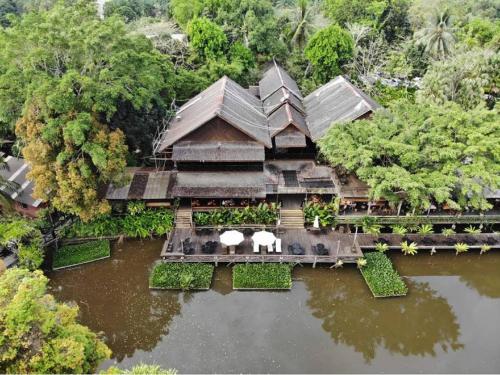
Another good option is the Sepilok Nature Lodge, located next door to the orangutan rehabilitation centre and slightly pricier. I dined at their restaurant twice, and it’s a beautiful spot where orangutans are sometimes spotted.

Borneo Sepilok Rainforest Resort (£££)
I stayed here!
Sepilok Nature Lodge (£££)
The 6 Best Things to Do in Sepilok and Sandakan
1. Kinabatangan River Cruise
Key info: 1 – 3 Days; includes pick-up/drop-off in Sandakan and Sepilok
I know that I’ve already talked about the Kinabatangan River, but it bears repeating: it’s one of the best places in the world to see fully wild orangutans and other animals, including macaques, proboscis monkeys, saltwater crocs and pygmy elephants.
Using jungle camps along the river as a base, the wildlife tours take place in rustic speed boats. They typically head out twice daily at the most active times for wildlife: early morning and evening.

The guides are very skilled at spotting signs of wildlife, so after some time weaving up and down the river, it shouldn’t be too long until you come upon your first monkeys.
I didn’t see any wild orangutans on my cruise. However, I saw more than 5 groups of proboscis monkeys, a long-nosed monkey endemic to the island.
Having already seen orangutans in Sumatra, this was my top goal, so I was delighted.


I also saw several different species of macaque, including a small group with tiny, playful babies. A couple of small saltwater crocodile sightings were an added treat.
Overall, the Kinabatangan River topped my list of the best things to do in Sandakan.


Whether you see orangutans or not, you should find it hard to forget about the blurry-eyed, misty mornings cruising on the river as the sounds of the wildlife pick up.
Not to mention the long-nosed proboscis monkeys bobbing from tree to tree, just out of reach.
2. Sepilok Orangutan Rehabilitation Centre
Key info: Feeding sessions at 8am and 3pm. Foreigners’ entry fee is RM 30 (adults) or RM 15 (children).
The great thing about visiting Sandakan is that, if you don’t see wild orangutans, you still have a good chance of seeing the great apes in action at the Sepilok Orangutan Rehabilitation Centre.
At this non-profit, all profits go towards the rehabilitation of displaced, captured and orphaned orangutans affected by the local logging industries.

The rehabilitation centre runs two daily feeding sessions (at 8am and 3pm), which are when you’re the most likely to see orangutans.
Now, I hear you. Is it ethical to feed orangutans? As I explain in my guide to where to see orangutans (which includes a Sumatra vs Borneo rating), it’s not ethical to lure wild animals with food.
However, this is different. The non-profit feeds orangutans to support their natural diet, especially while the newer orangutans are still learning how to forage from orangutans who are in the later stages of their rehabilitation.

That’s also why sightings aren’t always guaranteed. Sometimes the orangutans will find enough food in the surrounding forest, where they roam freely.
The 8am feeding session begins at the main platform, located at the end of the boardwalk, where you can keep watch from an air-conditioned room protected by a glass screen.
This requires a 15-minute walk along a wooden boardwalk, so when you also factor in the time needed to buy a ticket, you need to arrive at at least 7.30am.

The second, and best, feeding session follows on directly from the 8am session. It takes place at the outdoor feeding platform, following an announcement from the speakers.
The rangers will open a gate to the platform from the boardwalk. The open-air viewing platform was very busy when I visited, but it has a view over a ranger laying out a fresh set of food on a wooden platform.
Knowing the daily routine by heart, macaques speedily descend upon the wooden platform from the surrounding forest.

They were followed by the slower and more cautious orangutans, who carefully plucked the remaining food and headed back in to the forest.
There’s also a 3pm feeding session, although the morning is usually the best time to spot orangutans.
Tip: You can easily visit the sanctuary on your own. However, there aren’t many information placards, so if you want to know the history, it’s worthwhile booking a guided wildlife sanctuary tour.
3. Bornean Sun Bear Conservation Centre (BSBCC)
Key info: Foreigners’ entry fee is RM 50 (adults)
The Bornean Sun Bear Conservation Centre (BSBCC) is handily placed next door to the orangutan rehabilitation centre.
The non-profit organisation is dedicated to rehabilitating the Malayan sun bear, the smallest bear species in the world.
The centre was less busy than the orangutan sanctuary, which makes it a nice reprieve. It’s easy to get around, too: raised wooden platforms look out over the bear enclosures, where the tiny bears are scuffling and sniffing around.

There are lots of information boards around the centre, which make it easy to learn about the sun bears and how the rehabilitation centre supports them, ready for their release back into the wild.
This full-day tour covers the sunbear and orangutan rehabilitation centre and the RDC.
4. Sandakan Rainforest Discovery Centre (RDC)
Key info: Open from 8am to 5pm. Foreigners’ entry fee is RM 30 (adults).
The Sandakan Rainforest Discovery Centre (RDC) is another of the best things to do in Sepilok.
Some people are lucky enough to spot the semi-wild orangutans from the nearby sanctuary roaming through the RDC rainforest.
However, the main attractions are its nature walks, a canopy Skywalk and guided night walks.
Located in the vast Kabili-Sepilok Forest Reserve, the rainforest Skywalk is a raised 20-metre-long platform that passes between several towers suspended above the rainforest. From the Skywalk, you might spot monkeys and birds like the sunbird.

There are several other trails around the RDC, where mouse deer and civet cats are sometimes spotted.
The centre is open from 8am to 5pm daily, but the night walks (from 6pm to 8pm) allow tourists to visit the forest after dark, in search of wildlife using red lights.
Tip: Night tours must be pre-booked at the ticket counter. This full-day tour only visits the RDC in the daytime.
5. Explore Sandakan City and Puu Jih Shih Temple
Now that you’re done with the best things to do in Sepilok, you have two main options: fly to your next destination or explore the city.
The city’s most popular tourist attraction is Puu Jih Shih Temple, a hilltop temple built in 1987. It’s only small, but it has beautiful views over the city along with gilded Buddhas and dragon sculptures.

For food-lovers, the Sandakan Central Market is a must-visit. It’s a typical local market that sells local meat, fish, fruit, vegetables and dried seafood snacks. The hawker stalls will also serve you freshly cooked Malay food, including local seafood dishes.
Sandakan also has a museum housed in a colonial-style bungalow, the Agnes Keith House. It was the home of the American author Agnes Keith, so the exhibits include items from her life.
It also recounts her family’s experiences as prisoners at a Japanese World War II camp.
If you’re short on time, you can book a Sepilok and Sandakan city tour to visit the wildlife sanctuaries and the city in one fell swoop.
6. Mangrove and Fireflies
Finally, if you do choose to spend the full day in Sandakan, you might as well finish off your Sandakan itinerary with a sunset cruise around the city’s mangroves.
Starting with tea, these tours visit Pamaguan Island to watch the fireflies around the mangrove forest, before rounding off the day with a local seafood dinner. If you’re yet to see fireflies, this is your chance.
This sunset fireflies tour begins at 4.40pm, making it an easy add-on to a full day in Sepilok.
Should You Visit Labuk Bay in Sepilok?
Labuk Bay is an attraction in Sepilok where you can see proboscis monkeys up close. It runs two daily feeding sessions, which attract several groups of wild proboscis monkeys.
However, the problem is that Labuk Bay is not a non-profit organisation. It is run by the same people who own the neighbouring palm oil plantation.
The palm oil industry contributes to the continued deforestation and displacement of wildlife in Sabah.
Profits go towards the palm oil plantation instead of wildlife rehabilitation.

Yes, this is a good place to see the proboscis monkeys up close, but you might want to ask yourself, “at what cost?”
I hope you found my guide to the best things to do in Sandakan and Sepilok useful – leave a comment below to let me know how your trip goes (did you spot orangutans?). I’d love to hear from you.