Puncak Lawang: How to Visit the Lake Maninjau Viewpoint
Puncak Lawang, the viewpoint over Lake Maninjau, has to be one of the most impressive places I have visited in West Sumatra.
The crater lake (caldera) was formed by a volcanic eruption over 52,000 years ago, and is only a short drive away from Bukittinggi.
I spent two days at Maninjau Lake, interested to see how it compared to Lake Toba in North Sumatra. I decided that Puncak Lawang, the Maninjau Lake viewpoint, was worth a blog post of its own.
I’ll cover how to get there, entrance fees, and what to expect. Head over to my complete Maninjau Lake guide for more things to do and where to stay.
Disclosure: This post includes affiliate links. If you decide to click through and make a qualifying purchase, I will receive a small commission at no extra cost to you – thanks for your support.
Where is Puncak Lawang?
Puncak Lawang is a viewpoint over a small volcanic crater lake called Maninjau Lake. The lake is located in West Sumatra, on Indonesia’s largest island.
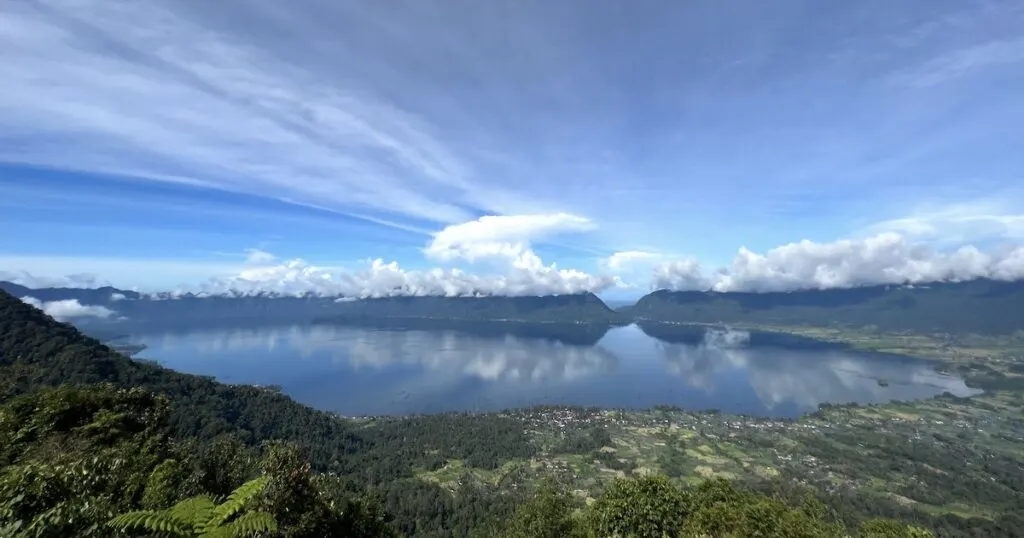
The viewpoint sits at the top of a ridge on the east side of the lake, overlooking fishing villages, spice trees and rice terraces.
The drive between Maninjau Lake and Puncak Lawang takes around 40 minutes and covers Kelok 44, a road with 44 hairpin bends.
Puncak Lawang is also within an hour’s drive of Bukittinggi, making it a popular day trip from the city.
Is Puncak Lawang Worth Visiting?
Puncak Lawang is an incredible viewpoint over Maninjau Lake. Whether you’re taking a day trip from Bukittinggi or visiting from the lakeshore, it’s well worth the trip.
I visited the lake itself before heading to the viewpoint, so it was particularly nice to see the full scale of the lake, having already biked almost 50 kilometres around the water’s edge.
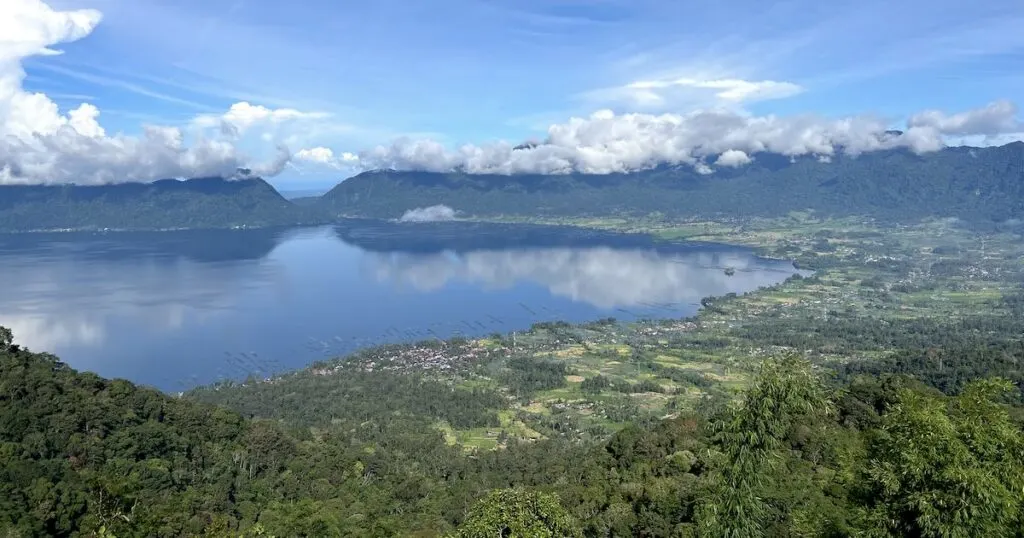
The steep, forested slopes merge into kilometres of rice terraces. On the water’s edge, you can also spot the fishing villages and fish farms.
If the weather’s just right, you’ll see the clouds reflected in the surface of the lake too.
Puncak Lawang gives you a great birds-eye view of the lake. However, I still recommend going down into the basin to explore the villages around the lake.
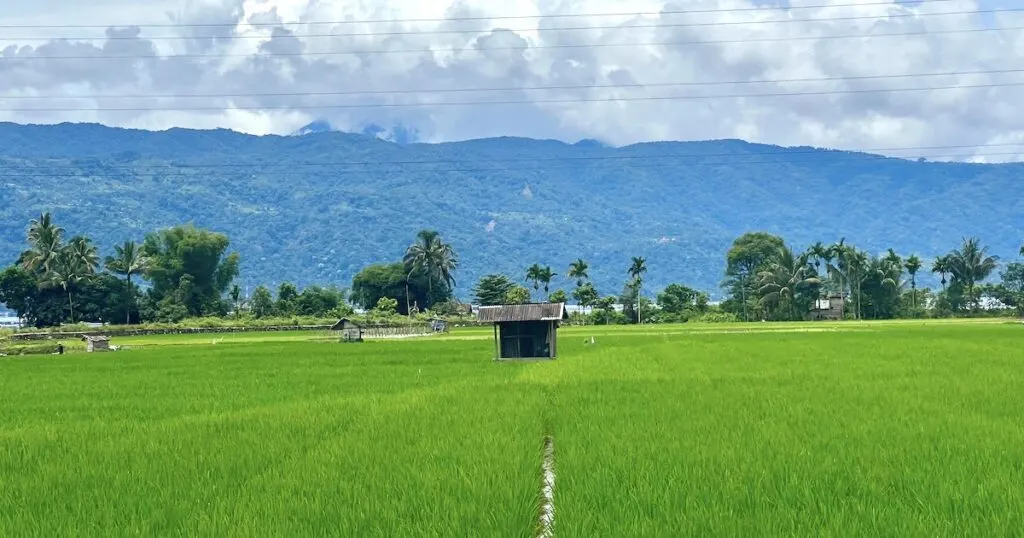
The views are very different – but just as special – at ground level.
A Short History of Puncak Lawang
Just like the nearest city, Bukittinggi, Puncak Lawang is no stranger to colonial rule. Dutch nobles used the area for their leisure.
The name Puncak Lawang is also quite interesting, as it includes ‘puncak’ (‘top’) and ‘Lawang’ (the name of the local village).
This makes logical sense; the viewpoint is at the top of Lawang village, which is tucked just under the viewpoint and surrounded by sugar fields.
Another nearby village, Ambun Pagi, means ‘morning honey’. This likely named after the morning mist that rises over the hilltop in the morning.
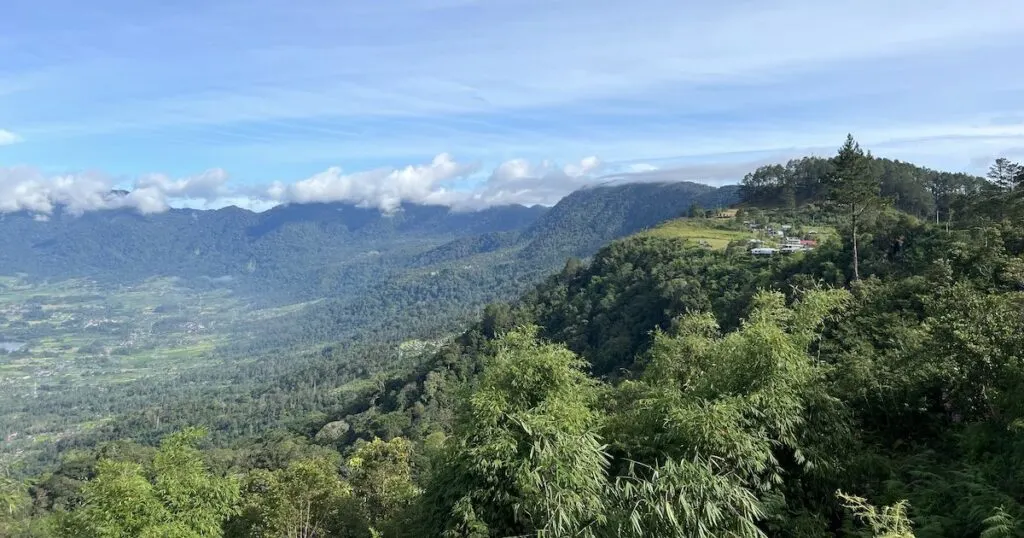
We know already that the crater below Puncak Lawang was formed by a volcanic eruption. Precisely when that happened is unknown, although it’s thought to be around 52,000 years ago.
Over the years, the slopes below the ridge developed into a thick forest, made up of mostly fruit trees, timber trees and spice trees growing coffee, nutmeg and cinnamon.
Up until 1998, people were able to swim in the lake. However, the fish farms have polluted the water since then, making swimmers ‘itchy’ or sick.
Fun fact: The ridge sometimes hosts international championships for paragliding.
How to Get to Puncak Lawang
You can visit Puncak Lawang by yourself or with a tour guide. If you are visiting by yourself, you need to drive a scooter or car.
If you’re visiting the ridge from Lake Maninjau, bear in mind that the road (Kelok 44) is steep, winding and challenging. It takes 30-45 minutes.
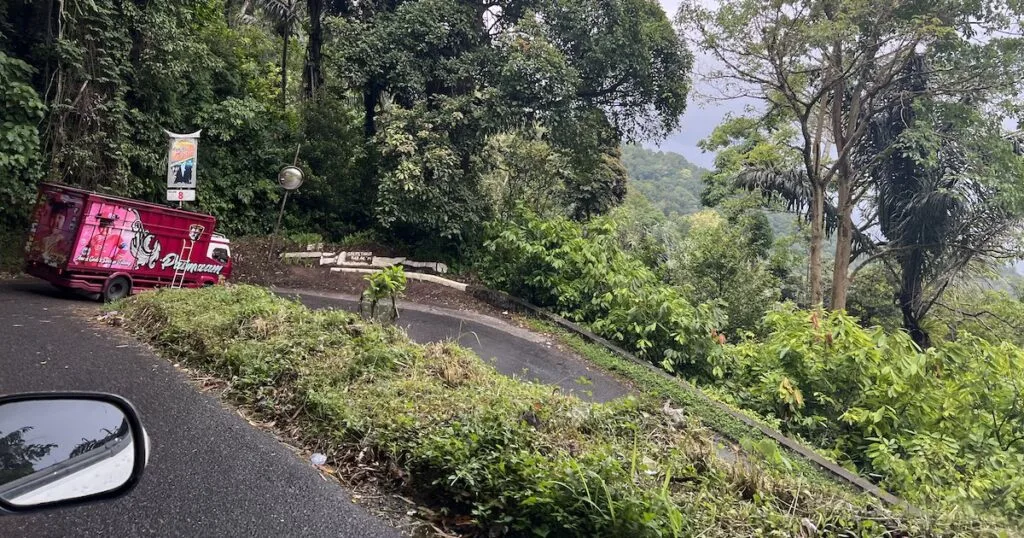
Kelok 44
From Bukittinggi, the drive is less challenging and takes approximately an hour.
The second option is to take a tour guide from Bukittinggi or Maninjau. They can be quite expensive.
The going price for a driver to take you to and from Puncak Lawang from the main village in Lake Maninjau is 300k IDR (£15).
Where to Stay Near Puncak Lawang
The best place to stay for visiting Maninjau Lake and Puncak Lawang is the village at the foot of Kelok 44, Manindjau. This is the main tourist base.
I stayed at Beach Guesthouse, which is an affordable guesthouse on the lakeshore. I loved it. They helped to arrange bicycle hire for me and also have a nice restaurant with an outdoor terrace.
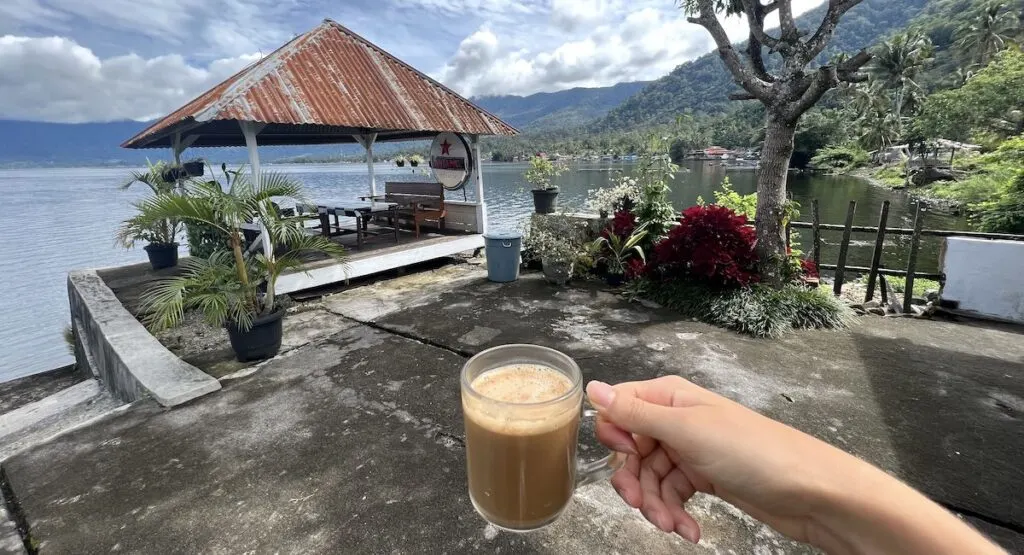
Beach Guesthouse
Entrance Fees at Puncak Lawang
To access the main viewpoint at Puncak Lawang, you must pay an entrance fee of 25k IDR per person, plus parking costs per vehicle.
Alternatively, there’s a smaller viewpoint – pictured below – before the guard’s hut where you can take pictures for free.
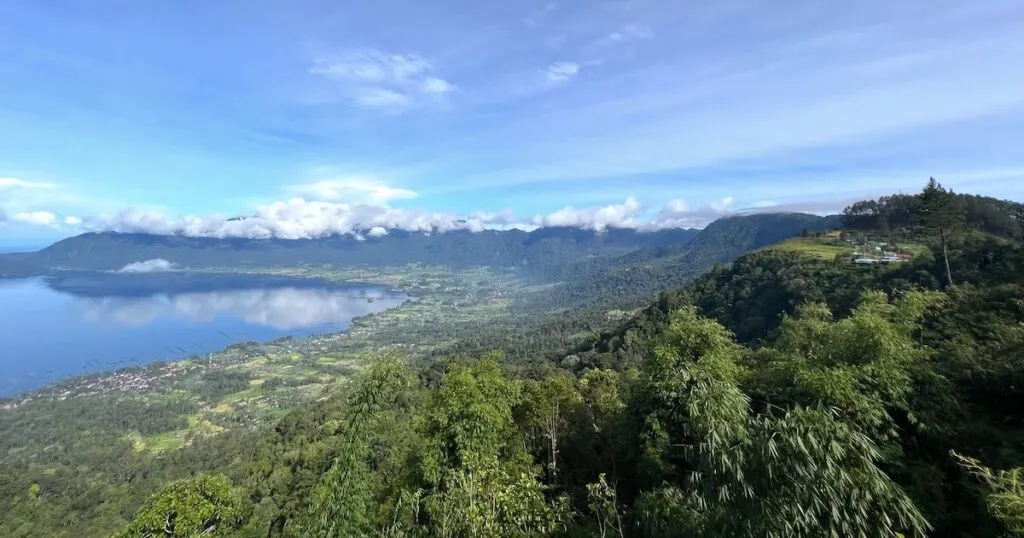
The free viewpoint
The second, main viewpoint provides a slightly better view. As you can see from the picture below, you can see much more of the lake.
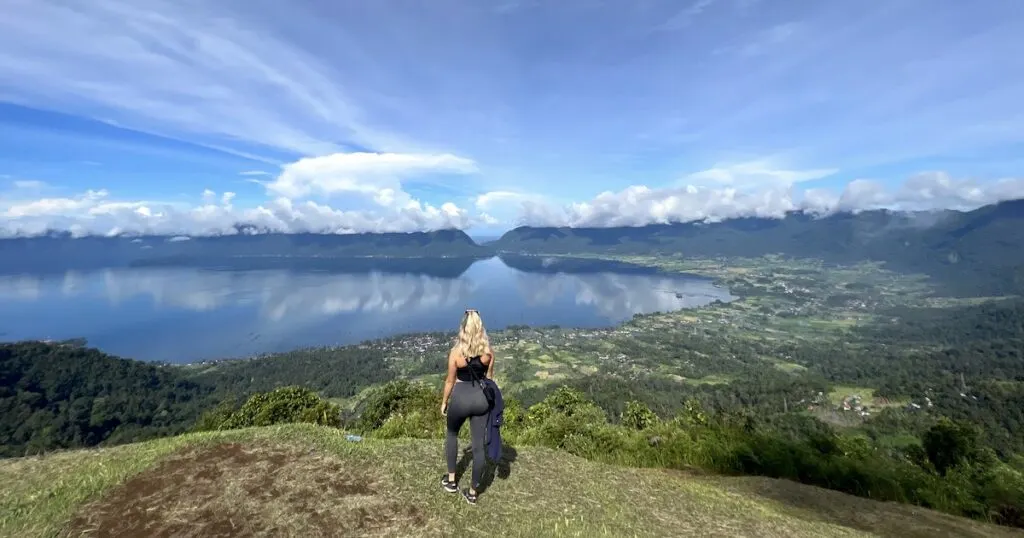
The second viewpoint
Things to Do at Puncak Lawang
Puncak Lawang is primarily a viewpoint. The view over Maninjau is worth its price in gold alone. The crater lake is the second-largest in west Sumatra, second only to Lake Singkarak.
If you walk down from the ridge and to the opposite side of the restaurant, there are also views over sugar cane fields and distant hills.
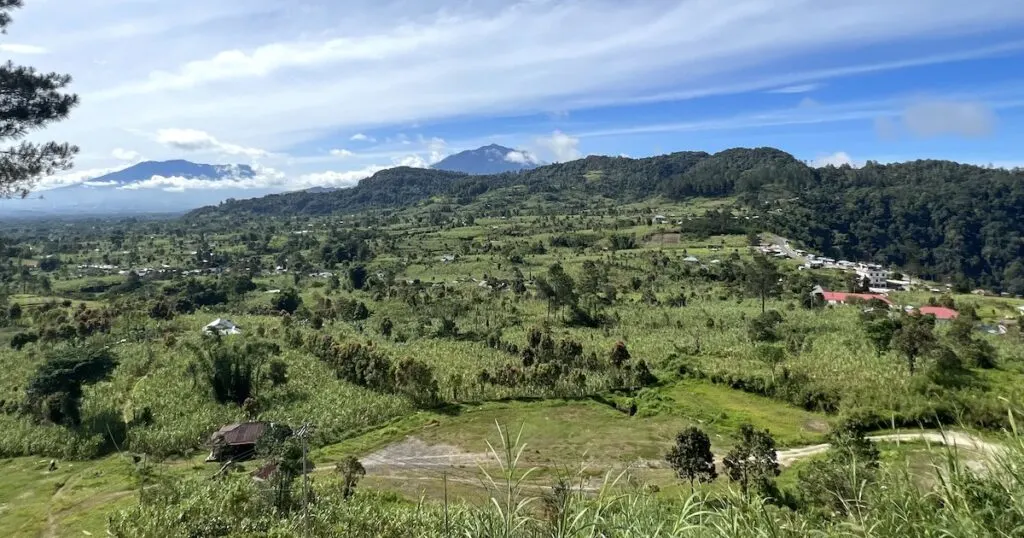
There are multiple ‘Instagrammable’ spots with bamboo structures where you can take pictures, as well as picnic benches dotted between the trees.
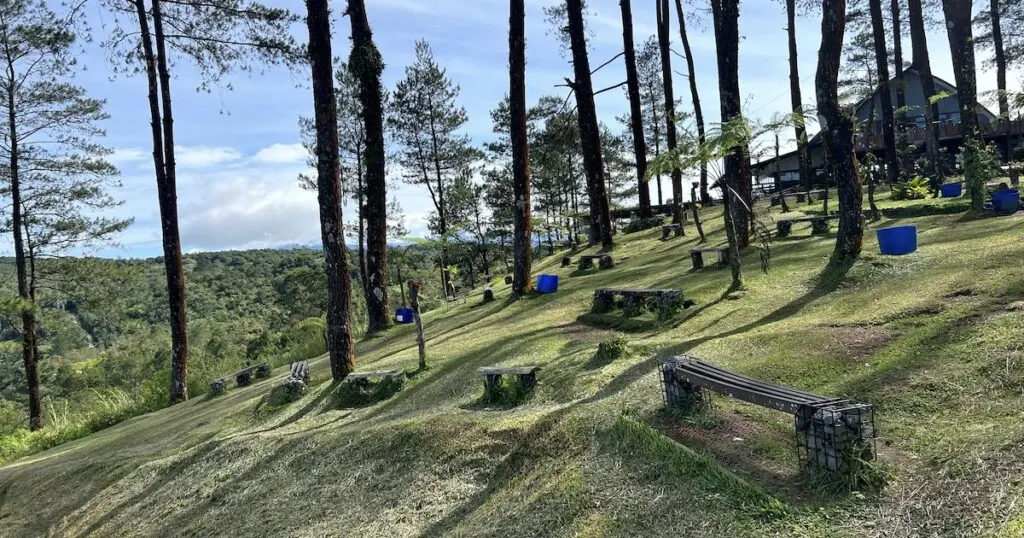
On the right-hand side, above the picnic benches, is a coffee shop. It has a really nice terrace overlooking the lake, so it’s worthwhile making a stop there if it’s open.
The small zipwire at Puncak Lawang was not open when I visited during Ramadan, but you may want to check that out too.
What is the Best Time to Visit Puncak Lawang?
The best time to visit Puncak Lawang is early morning. Not only does this help you to beat the crowds, but it also avoids the thick mist that rises over the hill from around midday through to mid-afternoon.
Sunset is generally another good time to visit the viewpoint because haze usually clears up around golden hour.
The sun sets behind the opposite side of the lake from the viewpoint, which is ideal for photographs.
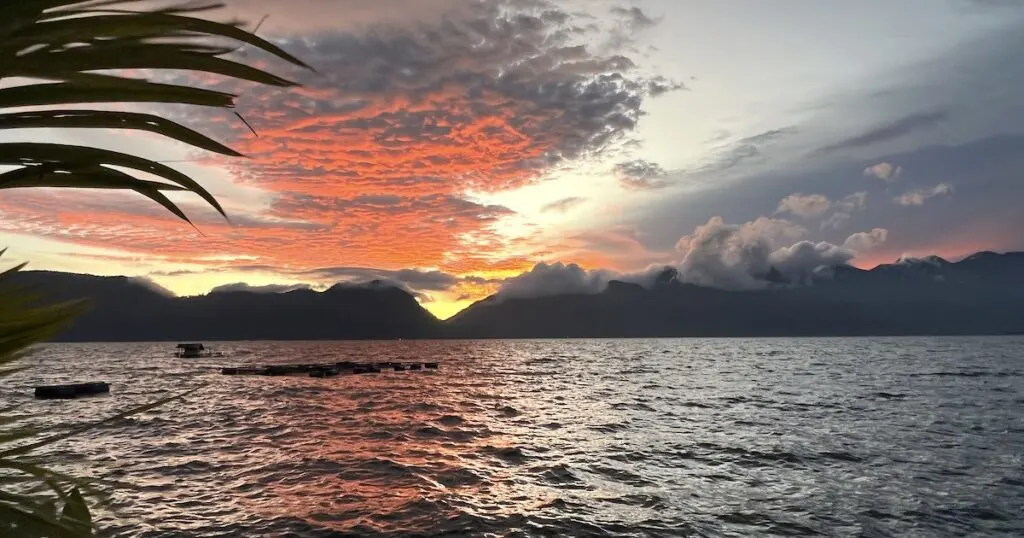
The view at sunset from within the crater
Clear skies are the best conditions for visiting the viewpoint. If it’s rainy, you can expect little to no view.